
04Myths & Facts 5 MIN READ
Do We Only Use 10% of Our Brains?
A stubborn pop-science myth, debunked with basic neuroscience. We trace where it started, what brain imaging shows, and why it refuses to die.
- The claim
- We only use 10% of our brains.
- The verdict
- MYTH
- In short
- Imaging shows activity throughout the brain, and injury to even small regions has major effects.
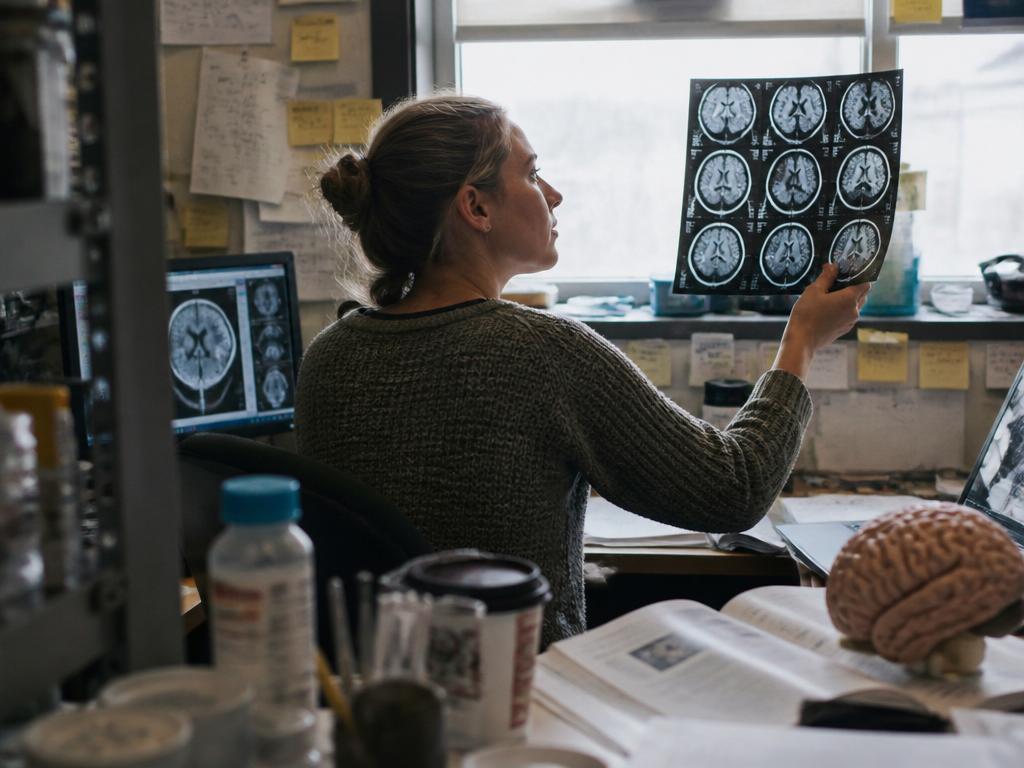
Do we only use 10% of our brains? It is one of the most repeated claims in all of pop science, the supposedly tantalizing idea that vast reserves of mental power sit dormant, waiting to be unlocked. It shows up in films, motivational talks, and casual conversation. It is also, by the standards of what neuroscience understands, simply not true. Understanding why is a small tour through how the brain actually works.
Where the myth started
The exact origin of the “10 percent” claim is murky, which is itself telling: a statistic this specific ought to trace back to a clear source, and this one does not. It has been attributed over the years to various misreadings and misquotations, sometimes loosely associated with early scientific figures who never actually made the claim in the form it now takes. The number appears to have taken on a life of its own through repetition rather than through any solid finding.
Part of the myth’s staying power comes from how appealing it is. The idea that we are operating at a fraction of our potential is flattering and hopeful, it implies a hidden upgrade is available if only we could access it. That emotional pull helps explain why the claim spread so widely and why it has been embraced by self-improvement messaging and entertainment alike. But appeal is not evidence, and a comforting story can be wrong.
The lack of a credible original source is a useful clue. When a precise-sounding figure circulates everywhere yet cannot be tied to any real study establishing it, that is a sign the figure is folklore dressed up as fact.
What brain imaging shows
What modern neuroscience actually understands directly contradicts the 10 percent idea. Brain imaging techniques allow researchers to observe activity across the brain, and the broad picture they reveal is that we use far more than a tenth of it. Different regions are active during different tasks, and over the course of normal functioning, activity is seen throughout the brain rather than confined to some small sliver.
Several well-established points undercut the myth:
- The brain is highly active, even during rest and sleep, not dormant in some large fixed portion.
- Different functions, such as movement, vision, language, memory, and emotion, are handled by different regions, which are recruited as needed.
- The brain is metabolically expensive, consuming a large share of the body’s energy relative to its size, which would make little sense if most of it sat permanently unused.
Another powerful line of evidence comes from what happens when the brain is injured. Damage to even small areas can produce significant effects on a person’s abilities. If 90 percent of the brain were idle filler, harm to much of it would be inconsequential, yet that is clearly not how brain injury works. The functional importance of so many regions is hard to reconcile with the notion of vast unused space.
| The myth says | Neuroscience indicates |
|---|---|
| 90 percent of the brain is unused | Activity is observed throughout the brain |
| Idle reserves await unlocking | Regions are recruited for different functions as needed |
| Most of the brain is dispensable | Damage to small areas can have major effects |
This does not mean every neuron fires at once, all the time. The brain is efficient, activating what is needed for a given task rather than blazing at full capacity everywhere simultaneously. But “we don’t use all of it at every moment” is a completely different statement from “we only use 10 percent of it, ever.” The first is true and unremarkable; the second is the myth.
Why it persists
If the science is this clear, why does the myth refuse to die? Part of the answer, as noted, is its hopeful appeal: the promise of untapped potential is more exciting than the accurate but less dramatic reality. Stories that flatter us and offer the prospect of hidden abilities tend to travel well.
Repetition is another factor. The claim has been recycled so often across popular culture, in movies, advertisements, and offhand remarks, that it can feel like common knowledge simply because it is so familiar. Ideas repeated frequently enough acquire a sense of truth regardless of their accuracy, a reminder that popularity is not a reliable guide to whether something is correct.
There is also a kernel that gets distorted along the way. It is true that people can learn, grow, and develop skills throughout life, and that there is real room for improvement in how we think and what we accomplish. That genuine capacity for growth is sometimes misremembered as evidence for unused brain matter, but the two are not the same. Improving your abilities is about learning and practice shaping the brain you fully use, not about switching on dormant gray matter.
The bottom line
The claim that we use only 10 percent of our brains is a durable myth without a credible source, kept alive largely by its flattering promise of hidden potential and by sheer repetition. Brain imaging shows activity throughout the brain, different regions handle different functions, and damage to even small areas can have major effects, none of which fits the idea of vast idle reserves. We do not fire every neuron at once, but that efficiency is a far cry from leaving most of the brain unused. The hopeful part is real in a different way: we can keep learning and growing, using the whole brain we already have.